Services
Developer Support
Broken pipelines blocking releases. Monitoring alerts that fire too late, or not at all. Infrastructure nobody documented. Your developers should be shipping product, not firefighting. Developer support is the operational service that keeps your engineering team unblocked.
Common symptoms
Does your dev team recognise these?
- ×A pipeline breaks and nobody knows how to fix it
- ×Developers get paged at 2am for infrastructure issues
- ×No runbooks, no documentation, tribal knowledge only
- ×Monitoring is too noisy to trust, or simply absent
- ×Cloud environments drift between dev, staging, and production
- ×Every infrastructure change is a manual process someone has to remember
What we offer
Infrastructure for dev teams
When something breaks, your developers should not be the ones fixing it. We handle the operational side of your engineering platform so your team can stay focused on the product.
- Development Environments
- We set up and maintain development, staging, and production environments so your team can focus on writing code rather than managing infrastructure.
- CI/CD Pipelines
- Automated build, test, and deployment pipelines that reduce manual overhead and help your team ship reliable software faster.
- Cloud Infrastructure
- Scalable cloud environments on Azure or AWS, configured and managed so your developers have the resources they need without the operational burden.
- Version Control & Collaboration
- Git hosting, branching strategies, and collaboration tooling tailored to your team's workflow and project requirements.
- Server & Database Management
- We manage your application servers, databases, and supporting infrastructure, patching, monitoring, and optimising so your team doesn't have to.
- DevOps Tooling
- Containerisation, orchestration, monitoring, and logging solutions configured to fit your development lifecycle and operational needs.
What we manage
The infrastructure your team depends on
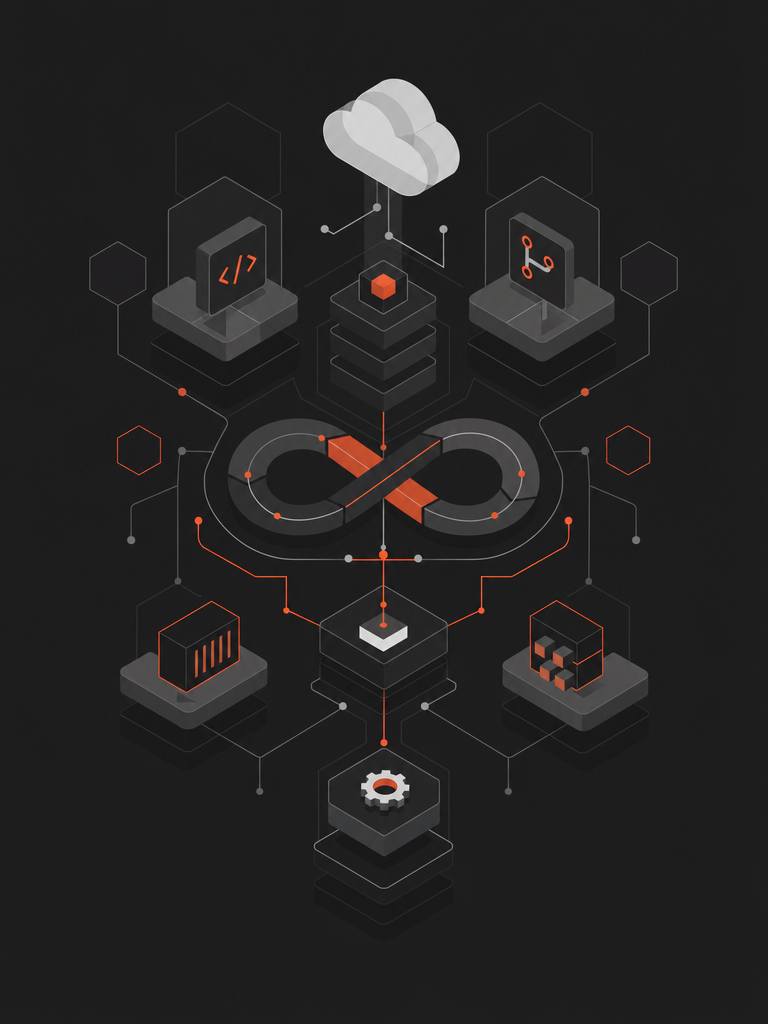
Software teams accumulate operational debt fast: cloud accounts nobody audited, pipelines that break without warning, databases with no backup strategy, monitoring nobody tuned. We take on the day-to-day management so your engineers stop firefighting and start shipping.
- Cloud infrastructure.
- We provision, manage, and optimise your cloud environments on Azure or AWS. This includes compute, networking, storage, and IAM configuration, as well as cost monitoring to prevent bill surprises. Environments are kept in sync across dev, staging, and production so what works in testing works in production.
- CI/CD pipelines and deployments.
- We build and maintain the pipelines that take code from a commit to a running deployment. Whether you use GitHub Actions, Azure DevOps, or another platform, we configure build steps, test gates, environment promotion, and rollback procedures. When a pipeline breaks, we fix it, so your developers can keep shipping.
- Databases and application servers.
- We manage the operational side of your data layer: patching, backups, query performance monitoring, and capacity planning. For application servers we handle updates, process supervision, and restart procedures. You get a managed data tier without needing a dedicated DBA or sysadmin on the team.
- Monitoring and alerting.
- We configure observability tooling to track uptime, error rates, latency, and resource utilisation across your stack. Alerts are tuned to your thresholds and routed appropriately so on-call engineers hear about real incidents, not noise. Dashboards are set up so your team has visibility without needing to dig into logs manually.
How we work
Built around how engineering teams operate
Working with a development team is different from supporting a general office. The communication style, the tools, and the expectations around response time are all different. We have structured our service accordingly.
- Async by default.
- Most infrastructure work does not require a live call. We work asynchronously via your existing communication tools, documenting changes, sharing context, and keeping your team informed without interrupting their flow. When something needs real-time collaboration we are available, but the default is async so your engineers stay productive.
- Responsive to incidents.
- When something breaks in production, response time matters. We provide defined SLAs for incident response, with clear escalation paths and out-of-hours coverage options for teams that cannot afford downtime. Engineers know who to contact and what to expect, so recovery starts immediately rather than waiting for business hours.
- On-demand for projects.
- Infrastructure needs change as products grow. New services need provisioning, architectures need rethinking, and migrations need planning. We provide on-demand engineering capacity for these project-based tasks without requiring a separate engagement or statement of work for every change. Just raise it and we will get it done.

Getting started
From audit to managed in three steps
Taking on management of an existing infrastructure requires care. We follow a structured onboarding process that gives both sides confidence before we assume responsibility for anything.
- 1
Audit your existing infrastructure
We start by mapping your current stack: cloud accounts and services, deployment pipelines, application servers, databases, monitoring, and any technical debt that affects reliability or security. This gives us a clear picture of what exists, what is working well, and where the risk areas are before we take on responsibility for anything.
- 2
Document and hand over knowledge
Infrastructure knowledge locked in people's heads is a liability. We create or update runbooks, architecture diagrams, and incident response procedures for every system we manage. Your team retains full visibility and can act independently in an emergency. Ongoing changes are documented as they happen so knowledge stays current.
- 3
Manage, monitor, and improve
With the audit complete and documentation in place, we take on day-to-day management of the agreed scope. Monitoring is configured to your thresholds, patching and maintenance windows are scheduled, and a regular review cadence is set up to work through improvements identified in the audit. You get a stable platform that gets better over time, not one that just stays the same.
Operations vs strategy
How Developer Support relates to Developer Operations
Developer Support is the operational layer: managed infrastructure, async developer support, and incident response for the day-to-day needs of your engineering team. Our Developer Operations solution is the strategic layer on top: CI/CD architecture, infrastructure-as-code standards, cloud platform design, and DevOps ownership at the function level. If your team needs both day-to-day support and strategic DevOps ownership, the two work together.
This service is designed specifically for software development companies who need an IT partner that understands the tools and workflows their engineers depend on.
Frequently asked questions
Get your dev team back to building
We start with an audit of your existing infrastructure and pipelines, then take on the operational work that is slowing your team down.